
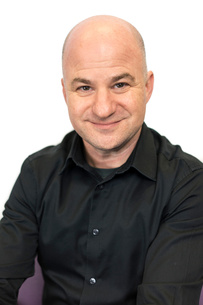
Programming languages, runtime systems, and operating systems; reliability, security, and performance.
Emery Berger's research spans programming languages, runtime systems, and operating systems, with systems that improve reliability, security, and performance. He created Hoard (influenced Mac OS X), DieHard (influenced Windows 7), and DieHarder (a secure memory manager that influenced Windows 8 heap hardening). Current work includes profilers such as Scalene. He co-directs PLASMA, is an Amazon Scholar, and created CSRankings.
Emery Berger is a Professor in the College of Information and Computer Sciences at the University of Massachusetts Amherst, the flagship campus of the UMass system. He graduated with a Ph.D. in Computer Science from the University of Texas at Austin in 2002. Professor Berger has been a Visiting Scientist at Microsoft Research and at the Universitat Politecnica de Catalunya (UPC) /Barcelona Supercomputing Center (BSC).
He co-directs PLASMA.
His honors include a Microsoft Research Fellowship, an NSF CAREER Award, a Lilly Teaching Fellowship, a Most Influential Paper Award at OOPSLA 2012, a Google Research Award, and a Microsoft SEIF Award; he was named an ACM Senior Member in 2010. Professor Berger served as the General Chair of the Memory Systems Performance and Correctness workshop (MSPC 2008), co-Program Chair of the 2010 ACM SIGPLAN/SIGOPS International Conference on Virtual Execution Environments (VEE 2010), Program Chair of the 2012 Workshop on Determinism and Correctness in Parallel Programming (WoDET 2012), co-Program Chair of the Fifth USENIX Workshop on Hot Topics in Parallelism (HotPar 2013), and co-organizer of the First SIGPLAN Workshop on Approximate and Probabilistic Computing. He is currently an Associate Editor of the ACM Transactions on Programming Languages and Systems, and will serve as Program Chair for PLDI 2016.